Opening Paragraph
Even a spotless bathroom can suddenly emit unpleasant smells. You’ve scrubbed the tiles, cleaned the toilet, and aired the room—so where’s the odor coming from? One of the most overlooked culprits is your shower drain. Understanding why bathrooms smell and how odor-resistant shower drains can fix it may just change how you approach bathroom design forever.
Snippet Paragraph
This article explains common sources of bathroom odor and how modern odor-resistant shower drains work to eliminate them. Learn practical solutions to persistent smells with expert-backed insights.
Transition Paragraph
Let’s explore the root causes of that nasty smell and see how technology—especially in drain design—can stop it at the source.
Odors from sewer gases, dry traps, and bacterial growth are commonly emitted through poorly sealed drains.
1. What Are the Most Common Causes of Bathroom Odor?
Snippet:
Sewer gases, biofilm buildup, and dry P-traps are major causes of unpleasant smells in bathrooms.

Dive Deeper
Bathrooms are exposed to moisture, organic waste, and fluctuating temperatures. Common odor sources include:
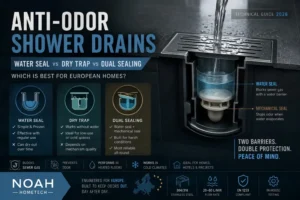
Dry P-Traps: When water in the trap evaporates, gases from the sewer can enter the room.
Bacterial Biofilm: Inside drain pipes, bacteria can produce sulfuric smells.
Improper Venting: Air pressure in the pipe system can pull odors into living spaces.
| Odor Source | Cause | Fix |
|---|---|---|
| Dry Trap | Evaporation or infrequent use | Odor-resistant core or refill trap |
| Sewer Gas Leakage | No airtight seal in drain | Mechanical or silicone valve drain |
| Mold/Bacteria | Standing water and organic buildup | Cleanable or anti-bacterial core |
When left unused for weeks, water seals dry up and sewer gas escapes through the floor drain.
2. How Do Traditional Drains Contribute to the Problem?
Snippet:
Standard drains rely on water traps that can fail in dry or low-use environments.

Dive Deeper
Most standard shower drains depend solely on the water barrier in a U-shaped pipe. While this is effective in active bathrooms, it fails when:
The room is infrequently used
Temperatures fluctuate and speed up evaporation
Plumbing lacks proper venting
This makes them unreliable in seasonal homes or underfloor heating environments.
Without air-tight closure, biofilm can spread into the room.
3. What Makes Odor-Resistant Drains More Effective?
Snippet:
Odor-resistant drains use mechanical or silicone sealing cores to block gases, pests, and moisture escape.

Dive Deeper
Odor-resistant shower drains solve key issues using:
Silicone Flap Valves: Flexible seals that open with water flow and close immediately after.
Mechanical Cores: Spring or magnet-based closures that maintain an airtight seal even when dry.
Hybrid Designs: Combine a water trap with a silicone or mechanical core.
Benefits include:
| Feature | Advantage |
|---|---|
| Air-tight Seal | Blocks sewer gas even without water |
| Replaceable Core | Easy maintenance and long product life |
| Insect & Backflow Protection | Blocks bugs and prevents cross-contamination |
They flex and re-seal rapidly, offering reliable performance in tropical and coastal environments.
4. How Can I Choose the Right Odor-Resistant Drain?
Snippet:
Drain selection should match the environment, usage frequency, and odor risk level.
Dive Deeper
For guest bathrooms or secondary homes: Go for mechanical core drains that stay sealed when dry.
For high-traffic bathrooms: Use a hybrid drain with both water and air-sealing functions.
For budget retrofits: Opt for silicone valve inserts that can be installed into existing frames.
| Usage Environment | Recommended Drain Type |
|---|---|
| Daily Use Bathrooms | Water Trap + Silicone Core |
| Infrequent Use Areas | Magnetic/Mechanical Seal Core |
| Outdoor Bathrooms | Gravity-Sealed Drain Core |
Interactive Quiz: Why Is Your Bathroom Smelling?
Is the smell strongest near the drain?
A) Yes
B) No
How often is the bathroom used?
A) Daily
B) Occasionally
C) Rarely
What’s the age of your drainage system?
A) Less than 5 years
B) 5–15 years
C) Over 15 years
Results:
Mostly A’s → Consider biofilm cleaning + anti-odor core
Mostly B’s or C’s → Install mechanical or silicone-seal drain
Conclusion
Bathroom odor isn’t just annoying—it can signal deeper plumbing issues. The good news? Odor-resistant shower drains offer an easy, effective, and long-lasting fix. Whether you’re building new or upgrading an existing space, switching to an odor-control drain is one of the smartest bathroom improvements you can make.
External Links Recommendation
References & Footnotes
International Plumbing Code, 2024
Journal of Environmental Plumbing Engineering, 2023
NSF/ANSI 350 Guidelines on Wastewater Odor Management
Abbreviations
P-Trap — Pipe trap used to hold water and block sewer gas
NSF — National Sanitation Foundation
OEM — Original Equipment Manufacturer
SS304 — Type 304 Stainless Steel
ABS — Acrylonitrile Butadiene Styrene