Introduction
Choosing the right drain system is one of the most important decisions in a concrete shower project. While both center drains and linear drains are widely used, they perform differently in terms of water flow, installation flexibility, maintenance, and modern bathroom design.
For residential and commercial projects alike, understanding these differences helps ensure better drainage performance and long-term reliability.
How Center Drains Work
Center drains are the traditional solution found in many bathrooms.
Installed in the middle of the shower floor, they require a four-way slope to direct water toward the drain opening.
Advantages
- Lower initial product cost
- Familiar installation method
- Suitable for standard bathroom layouts
Limitations
- More tile cutting required
- Less suitable for large-format tiles
- Water may collect in corners if floor slope is uneven
In concrete shower installations, achieving precise four-directional slope can also increase installation complexity.
Why Linear Drains Are Increasingly Popular
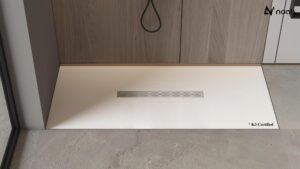
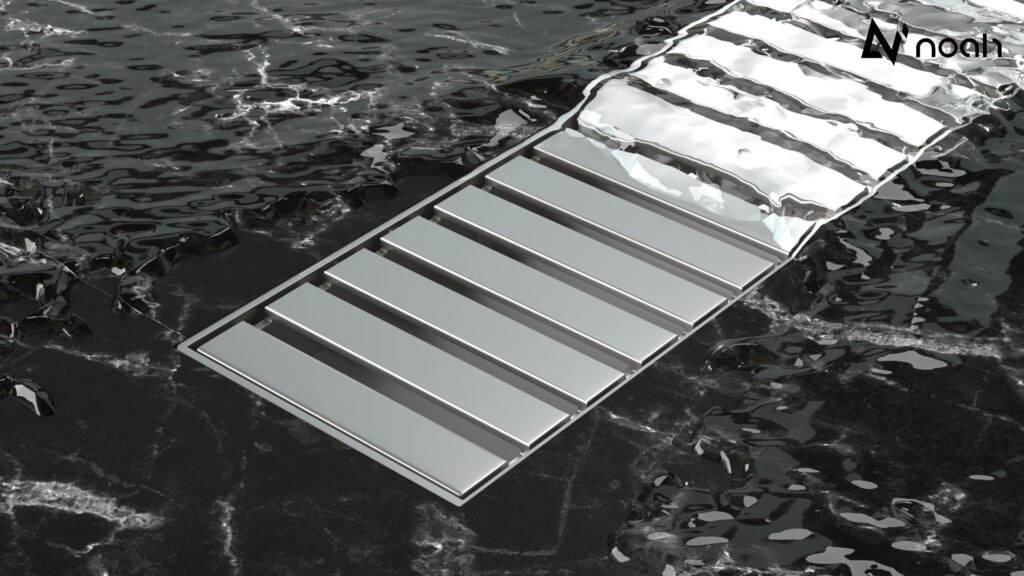
Linear drains are typically installed along a wall or at the shower entrance, allowing water to flow in a single direction.
This design has become increasingly popular in modern bathrooms, especially in Europe and North America.
Key Advantages of Linear Drains
1. Better Water Flow Management
Linear drains usually provide:
- Larger drainage channels
- Faster water removal
- More even water distribution
For concrete showers with high water volume, this helps reduce standing water.
2. Easier Floor Slope
Unlike center drains, linear drains only require a single-plane slope.
This simplifies installation in concrete shower systems and improves tile layout consistency.
3. Better Compatibility with Modern Design
Linear drains work especially well with:
- Large-format tiles
- Curbless showers
- Minimalist bathroom layouts
They also create a cleaner and more seamless floor appearance.
Drain Performance in European Climate Conditions
In many European regions, bathrooms commonly include:
- Underfloor heating systems
- Low-profile shower designs
- High humidity during winter seasons
These conditions make reliable drainage and odor prevention especially important.
A well-designed linear drain with:
- Deep water seal
- Anti-odor structure
- High drainage capacity
can help maintain stable performance even under changing temperature and moisture conditions.
What Matters Most in a Concrete Shower Drain
Whether choosing a center drain or a linear drain, buyers should focus on:
Drainage Capacity
A high-flow system helps prevent water accumulation.
Anti-Odor Technology
Reliable sealing systems are essential for long-term bathroom hygiene.
Learn more about modern anti-odor technology:
https://www.noahhometech.com/anti-odor-technology/
Material Quality
304 or 316 stainless steel is generally preferred for:
- Corrosion resistance
- Durability
- Long service life
Why More Projects Choose Linear Drains
For modern concrete shower projects, linear drains often offer a better balance of:
- Drainage efficiency
- Installation flexibility
- Design integration
At Noah Household Technology, drainage systems are designed with:
- Stainless steel construction
- Anti-clogging structure
- Anti-odor solutions
- OEM/ODM customization support
Explore more linear shower drain solutions:
https://www.noahhometech.com/product-category/floor-drain/
Choosing the Right Drain for Your Project
Center drains remain a practical option for basic bathroom layouts. However, for projects focused on modern aesthetics, efficient water management, and easier installation, linear drains are increasingly becoming the preferred solution.
The best choice ultimately depends on:
- Project budget
- Shower size
- Design requirements
- Long-term maintenance expectations
For contractors, distributors, and project buyers, selecting a reliable drainage supplier is just as important as choosing the drain type itself.