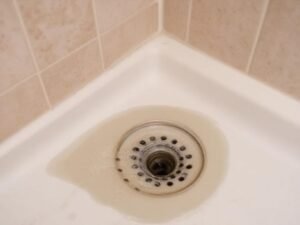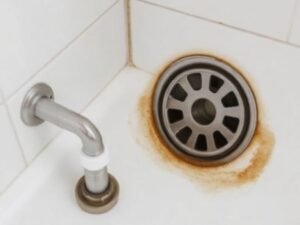
That faint smell coming from the shower drain is not a plumbing quirk — it is a failure of the seal between your bathroom and the sewer. And in European homes it is remarkably common, for three reasons: underfloor heating can increase evaporation from a water seal (especially in bathrooms left unused), vacation and guest bathrooms sit unused for weeks, and in unheated or seasonally occupied spaces a water seal may also be vulnerable to freezing. When that hidden layer of water disappears, sewer gas has a clear path back into the room.
There are three ways the industry answers this: a water seal (wet trap), a mechanical dry trap, and a dual-barrier (hybrid) design. This guide compares them honestly for European conditions and shows what a genuinely reliable anti-odour drain looks like in production — using our own factory’s approach so you have something concrete to judge against.
Why Shower Drain Odor Happens
Odour is not the drain’s fault alone. It is the result of sewer gas moving backwards when the sealing layer fails. A seal can fail because:
- It dries out — evaporation is the most common cause, and underfloor heating can accelerate it in rooms left unused.
- It cannot withstand backpressure — pipe pressure fluctuations overpower a weak seal.
- It becomes obstructed or worn — debris, hair, or aging components can prevent a mechanical seal from closing properly.
So the real engineering question is not “does it seal today?” but “does it keep sealing for months, even when unused and heated?” That is exactly where the three technologies differ.
Water Seal (Wet Trap): Simple, Proven — until the Water Is Gone
A water seal holds a reservoir of water in a U-shaped chamber. Because air cannot pass through water, it blocks sewer gas — as long as the water is there. It is simple, inexpensive, and very effective in a drain that is used constantly, such as a hotel shower or public facility.
The weakness is clear in European homes: the moment the water evaporates — and underfloor heating can speed that up in rooms left unused — the drain has no seal left at all. A guest bathroom or vacation home is the classic case where a wet trap alone quietly fails.
Dry Trap: Works Without Water, but Material-Dependent
A mechanical dry trap blocks odour with a physical flap or membrane instead of water. It does not depend on a standing water seal, so evaporation does not remove its primary odour barrier — which makes it attractive for low-usage rooms and unheated spaces.
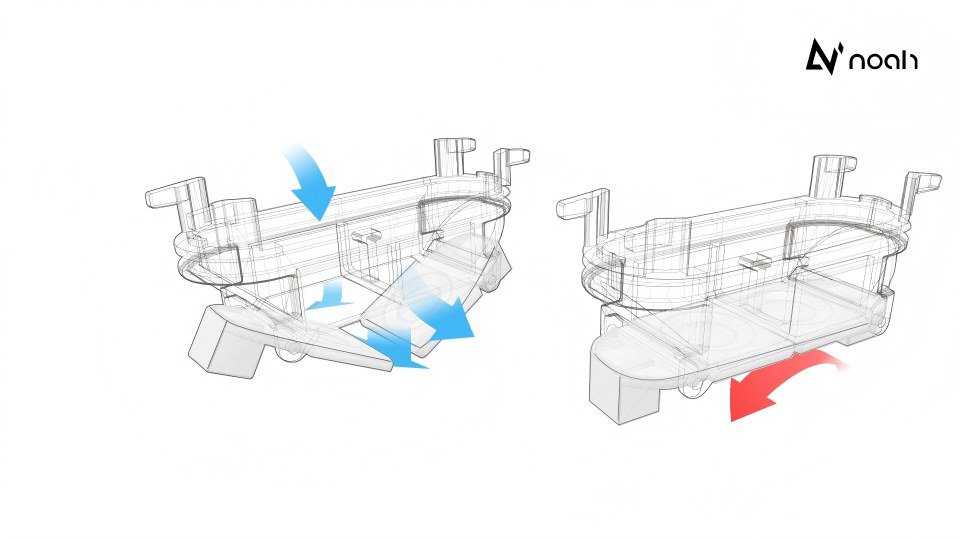
Its limitation is material: the long-term performance depends entirely on how the membrane or flap ages, and it can be affected by debris, hair, or wear over years of use. Simple in principle, but the quality of the mechanism and the plastic decides how long it really lasts.
Dual-Barrier (Hybrid): Water Seal + Mechanical Seal Together
Neither approach is wrong — each has a scenario it suits best. So the strongest answer combines them: a water seal for everyday reliability, plus a mechanical seal that takes over when the water is gone. If the wet trap evaporates, the mechanical barrier keeps the odour out; if the mechanical part faces debris, the water still stands. Two sealing mechanisms provide an additional layer of protection if one barrier becomes less effective.
This “redundant sealing” idea is why hybrid systems hold up across vastly different European conditions — heated floors, freezing garages, holiday homes, and busy rental bathrooms all at once.
What a Real Dual-Sealing Drain Looks Like in Production
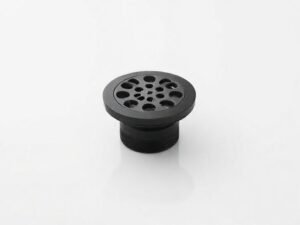
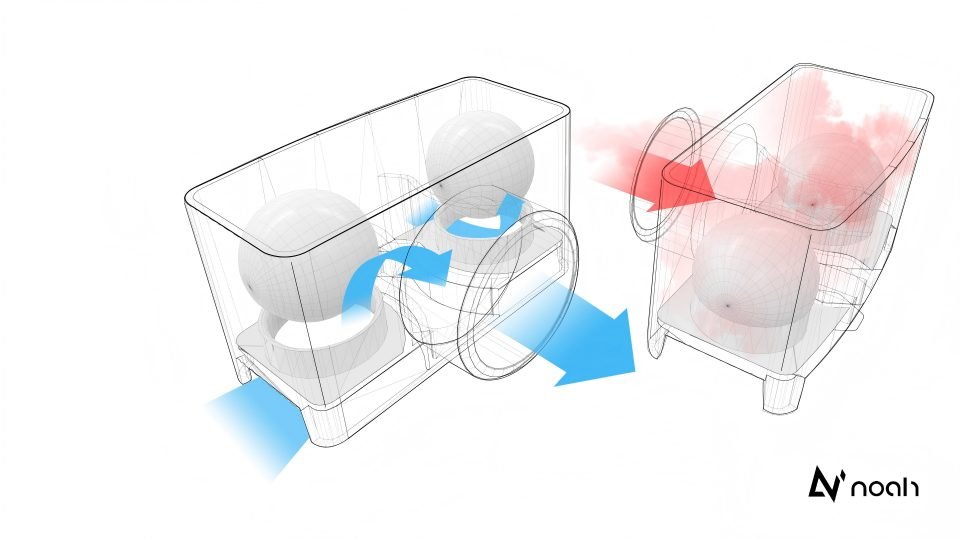
Designing a hybrid is one thing; manufacturing one that stays reliable for years is another. This is where a factory’s engineering actually shows. At Noah, our premium anti-odour solution is the FR series 360° siphon — a drain that uses a dry/wet mixed trap combined with concentrated anti-odour sealing, instead of a single barrier.
Concretely, that means:
- Two independent sealing layers — a water seal plus a mechanical dry-trap element working together, so odour is blocked whether the trap is wet or the room is heated and unused.
- Trap material that lasts — the cylindrical 360° siphon uses an ABS valve/filter assembly designed for corrosion resistance and long service, so the mechanism does not become the weak point.
- Real numbers you can hold us to — standard linear drains use a 46 mm water seal (32.6 mm on the FR series siphon), with flow rates running 20–60 L/min across the range and custom options beyond.
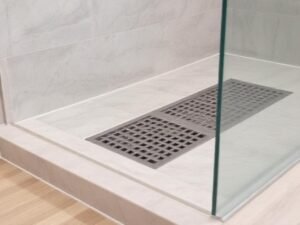
You can see the range — including drains built for linear drainage that suits European wet rooms — across our product line.
Which Anti-Odor Drain Should a European Buyer Choose?
| Scenario | Best fit | Why |
|---|---|---|
| Hotels, busy public showers | Water seal | Constant use keeps the seal topped up |
| Underfloor-heated bathrooms | Dual-barrier (hybrid) | Heat can dry wet traps; the mechanical layer still holds |
| Vacation / guest bathrooms | Dual-barrier (hybrid) | Stays sealed after weeks unused |
| Cold, unheated rooms | Dry trap or hybrid | No water to freeze, no seal to break |
| General modern family bathroom | Dual-barrier (hybrid) | Dual-barrier is a strong option where long-term odour protection is a priority |
As a rule for Europe: if the building is heated at floor level, visitors may stay away, or rooms go unheated in winter, a dual-barrier anti-odour drain is a dependable choice. When in doubt, choose redundancy — a drain designed to maintain odour protection even if one sealing mechanism becomes less effective.
Grounding Compliance: the Same Rigor as EN 1253
A drain that seals well is only complete if it also meets European performance standards. The same care that goes into anti-odour design should go into documenting compliance. For buyers importing into the EU, understanding what EN 1253 compliance really requires is part of sourcing responsibly — we cover the verification checklist in our dedicated guide.
Build Drains That Keep Europeans Odour-Free
The best anti-odour drain is the one that keeps working months after installation — through heating, periods of non-use, cold conditions, and normal pressure fluctuations. That is a design and manufacturing problem, not a sales claim. When you source with a factory that builds drains in-house, you can ask for the specific sealing build, the water-seal depth, and test data for the exact model you plan to sell — and verify it before you commit.
Tell us the drain type, material, size, and target market, and we will send the technical parameters, anti-odour build details, and a free sample. Contact our team to start your next anti-odour shower drain project.