A shower drain is a small item — but if it is not rated to handle the weight that lands on it, it fails in the worst possible way: drains crack, tiles around it shatter, and sometimes even the floor structure pays the price. That is why European projects specify drains with a load class, defined under EN 1253.
This guide explains the load-class system in plain procurement language — what K3, L15, and M125 actually mean, which fits which project, and how to verify a supplier’s load rating instead of trusting a sticker. We include it because it is one of the most frequently overlooked specs in drainage — and one of the most expensive to get wrong.
What a Load Class Actually Is
A load class states the maximum static load a floor drain, linear shower channel, or cover grid can withstand without permanent deformation or damage. It is not a suggestion — it is a tested engineering rating, and for products placed on the European market it falls under the EN 1253 standard for gullies within buildings.
Choosing a class below your project’s real traffic means the drain and its surroundings eventually fail. Choosing a class well above it is usually safe — heavier-rated drains simply cost a little more. The skill is matching the class to the usage, not always buying the heaviest.
K3, L15, M125: The Classes You Will Encounter
European guidance recognises a range of load classes. Three appear most often in shower-drain specifications:
| Class | Test load | Roughly | Typical use |
|---|---|---|---|
| K3 | 3 kN | ≈ 300 kg | Barefoot / soft-shoe areas — residential bathrooms, walk-in showers |
| L15 | 15 kN | ≈ 1,500 kg | Light wheeled traffic — hotel rooms, public hospitality |
| M125 | 125 kN | ≈ 12.5 t | Heavy traffic / vehicles — industrial or service areas |
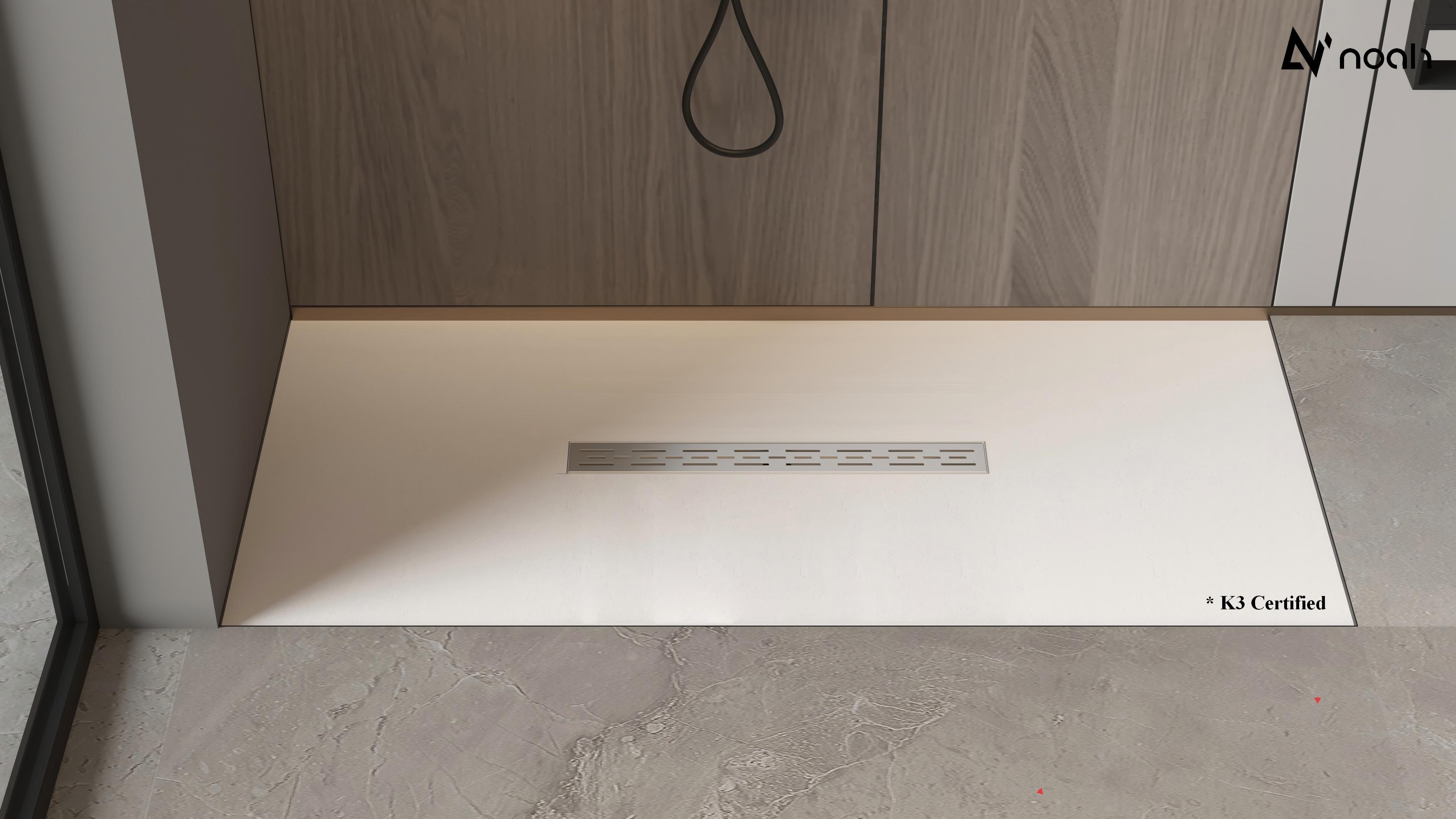
Read these as boundaries to match, not marketing: K3 comfortably covers a family shower floor; L15 adds headroom where luggage trolleys or maintenance carts may pass; M125 belongs to genuinely industrial zones, not bathrooms.
Which Load Class Does Your Project Need?
| Project type | Suggested class | Reason |
|---|---|---|
| Private home, apartment bathroom | K3 | Walk-in or tiled shower, barefoot traffic |
| Hotel guest room bathroom | L15 | Luggage carts, cleaning equipment may pass |
| Public / hospitality wet room | L15 | Higher traffic, occasional equipment |
| Service, garage, industrial | M125 | Vehicles or heavy machinery |
As a general rule for a shower drain: K3 covers the vast majority of residential projects, and L15 is the safe choice whenever wheeled or heavy foot traffic is possible. M125 is rarely needed for showers — reserve heavier classes for access floors and service areas.
How to Verify a Supplier’s Load Rating
A supplier can claim any class on a sales page. The engineering question is: was it actually tested? Under EN 1253, a drain is load-tested by applying the rated force through standard test blocks with a calibrated press, and a pass means no permanent deformation or cracking after the load is removed.

When you are sourcing, ask for:
- The tested load class of the specific model — not a general “Grade A” claim.
- The test method and record — a load test should follow the standard, on a calibrated press, not an estimate.
- Documentation for compliance — sources should be able to connect the load rating to the relevant European standard for your market.
A genuine manufacturer runs these tests in-house and can show you the test in action — rather than handing you a number with nothing behind it.
Sourcing from a Factory That Load-Tests in House
Load rating is a manufacturing discipline, not a brochure feature. Our drains are produced in-house from cold-rolled 304/316 stainless steel, including linear channels for walk-in showers, with quality-control checks that cover dimensions, sealing and load integrity before shipment.
Because our product line is built for bathrooms and showers, our range is load-tested to the K3 class — the EN 1253 standard for barefoot residential and walk-in-shower areas. Heavier classes (L15, M125) apply to wheeled-traffic and industrial zones rather than shower drains, so we focus on getting K3 right.
With more than a decade of drain-specific manufacturing and over 277+ distributors across 47+ countries, we understand that the class you specify must match the reality of the building. You can request the load rating you need for your project and the relevant test data for the exact model — and verify a sample under EN 1253 before committing to an order.
Load Test: Match the Class, Don’t Guess It
Choosing a drain with the right load class is a small decision with big consequences. Get it wrong and the failure shows up later, in cracked tiles and costly rework. Get it right at the sourcing stage — by matching the class to the real traffic and verifying the test — and the drain quietly does its job for years.
Tell us your project type, expected traffic, and drain specifications, and we will recommend the right load class and product. Contact our team to discuss your next European project.