“We meet EN 1253” is one of the most common claims you will see on a shower drain product page. But here is the part most buyers never stop to think about: EN 1253 is not a single test. It is a set of performance requirements — and a genuinely compliant drain must be tested against several of them, not one.
This guide walks through what EN 1253 actually requires a shower drain to withstand, what “passing” really involves, and — most importantly for a buyer — what test evidence you should ask for before you commit an order. It is written as a sourcing companion to our broader EN 1253 compliance guide.
What EN 1253 Actually Covers
EN 1253 covers gullies (floor and shower drains) for use within buildings. It is structured in two parts:
- EN 1253-1 — Requirements: the performance levels a gully must meet.
- EN 1253-2 — Test methods: the standardised procedures used to verify those requirements.
So “compliance” is not one checkbox. It rests on a set of performance areas, tested under defined methods. The specific values and classes can vary by product type and intended class, so the right habit is to confirm the applicable requirements for the exact model — not to accept a blanket claim.
The Performance Areas a Compliant Drain Must Handle
Across EN 1253-1 and its test methods, a compliant shower drain is assessed against these categories.
1. Load-bearing capacity
The drain must withstand a rated static load without permanent deformation or cracking. In practice this is tested with a calibrated press applying the rated force, and the class — such as K3 for residential bathrooms, or heavier classes where wheeled or industrial traffic exists — defines the level. The load class you choose should match the real traffic of the project, not just the brochure.

2. Water discharge / flow
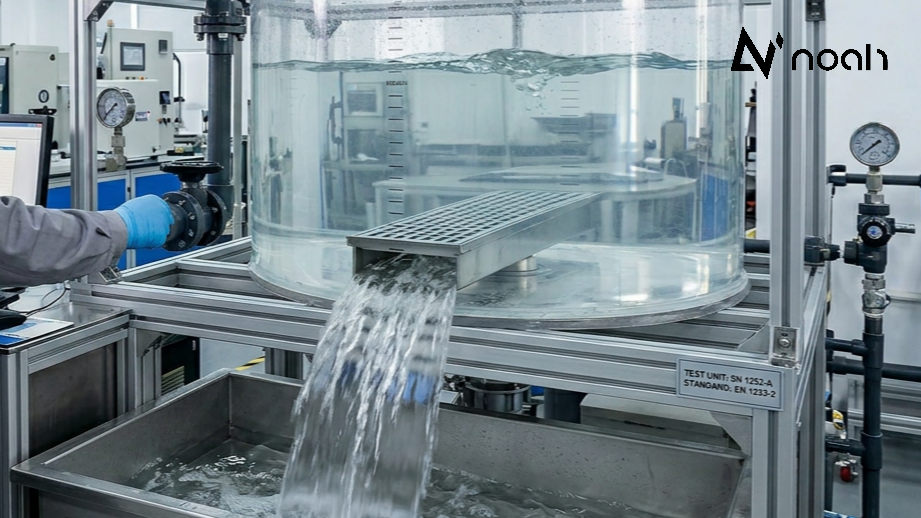
The drain must carry a rated flow of water under defined conditions. This matters in the shower context because a drain that cannot move the water quickly enough leaves standing water at your feet. Flow is verified on a test rig rather than estimated — which is exactly why we recommend asking how a stated L/min figure was obtained.
3. Odour tightness
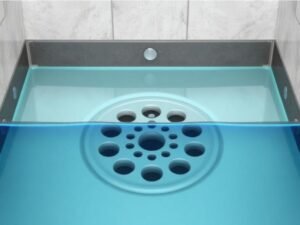
A drain must prevent sewer gas from entering the building. For a trap-based design, this rests on a maintained water seal being able to block gas — and it should hold not only in normal use but under backpressure and when the trap is challenged. This is the property behind the “anti-odour” claims you see, and it is testable.
4. Watertightness
The drain body must not leak water into the structure around it. This is a seal-integrity property checked as part of compliance.
5. Resistance to hot water and cleaning agents
Bathroom drains face hot water and aggressive cleaning products over years of service. A compliant product must demonstrate resistance to the temperatures and chemicals it will realistically meet — durability that keeps the drain working, not just looking compliant on day one.
What Test Evidence You Should Request
A supplier’s word is not test evidence. Before you place a large order, ask for:
- The tested load class of the specific model — and the record to back it.
- Flow test data — how the stated L/min was measured, on what rig.
- Odour-tightness / seal data — for drains advertised as anti-odour.
- Watertightness confirmation — that the body seal holds under test.
- Documentation for your market — the relevant declarations and test records tied to the product, not a generic PDF.
If a supplier cannot connect its load rating, flow figure, or seal claim to an actual test method, treat the claim as unverified. That discipline is what separates a manufacturer from a trader with a sticker.
How a Real Factory Verifies These
At Noah, because our drains are built for bathrooms and showers, compliance is a hands-on process, not a slogan. Our range is load-tested to the K3 class — the standard for residential walk-in showers — and in-house checks cover flow, sealing and dimensions, with documentation made available for your market.
With more than a decade of drain-specific manufacturing across 277+ distributors and 47+ countries, we are used to buyers who want to verify before they order. Tell us the drain type, material, size, and target market, and we will share the technical parameters and the relevant test data for the exact model — and send a sample to test yourself.
Buy Verified, Not Just “Compliant”
EN 1253 compliance is a set of real, test-backed requirements. The more you know what those tests cover, the better you can judge a supplier’s claim — and the less likely your brand is to face a failed audit, a blocked batch, or a product that fails on site. Start by asking the right questions, and verify the answer with evidence before you commit.